
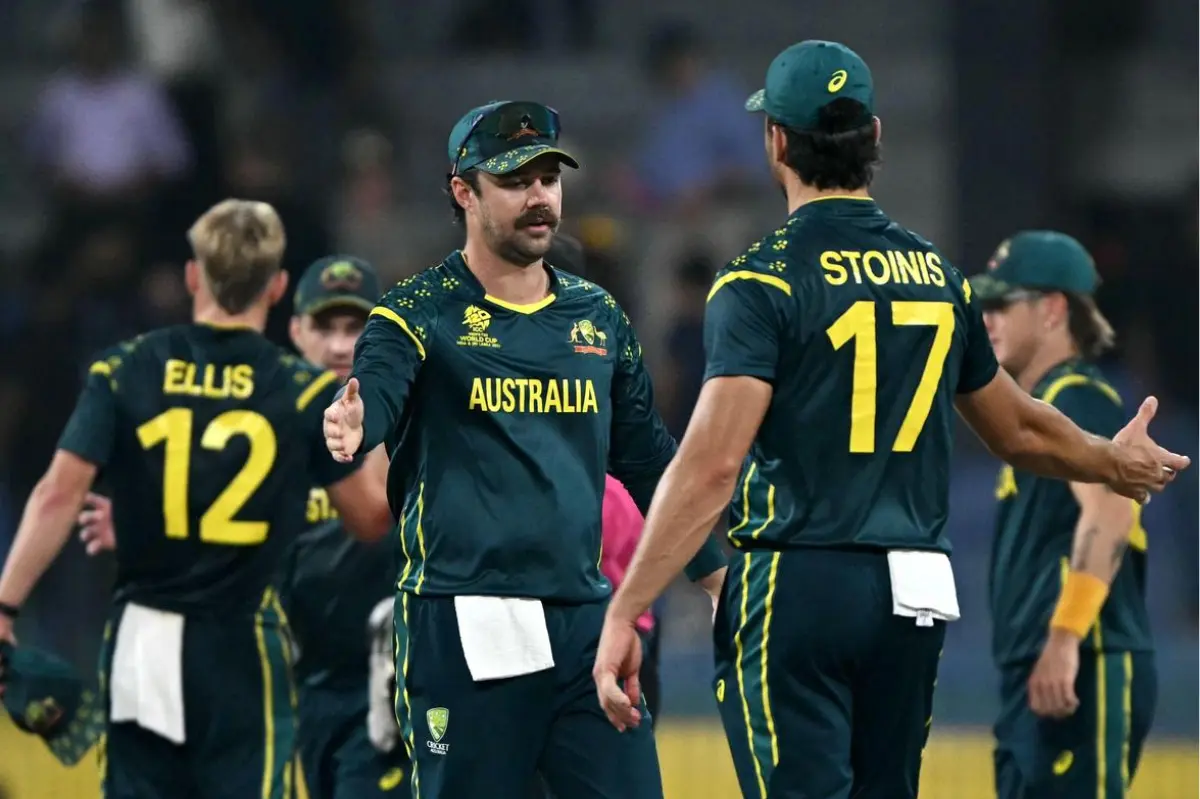
Picture Courtesy: Sports Star The Hindu
Australia’s campaign in the ICC Men’s T20 World Cup has taken a sharp turn after consecutive defeats to the Sri Lanka national cricket team and the Zimbabwe national cricket team. The scorecards from both matches highlight structural issues rather than isolated mistakes. If Australia want to stay alive in the tournament, they must address these problems immediately.
Loss to Sri Lanka: Missed Opportunity with the Bat
Australia posted 181 after a dominant opening stand between Travis Head and Mitchell Marsh. At one stage, the team looked set for a 190-plus total. However, once the partnership broke, the scoring rate dipped. Australia failed to fully capitalise on a strong platform, leaving valuable runs unused.
Sri Lanka chased the target with confidence. Pathum Nissanka anchored the innings with an unbeaten century, while Kusal Mendis provided steady support. Australia’s bowlers struggled to take wickets in the middle overs, allowing Sri Lanka to build momentum without panic. The lack of breakthroughs meant Australia never regained control of the match.
Zimbabwe Shock: Top-Order Collapse Proves Costly
Against Zimbabwe, Australia faced a different challenge. Zimbabwe posted 169/2 through disciplined batting and smart strike rotation. The total looked chaseable, but Australia’s top order collapsed early in the powerplay. Quick wickets increased pressure immediately.
Blessing Muzarabani led Zimbabwe’s bowling attack with precision. He attacked the stumps and maintained tight lines. Australia failed to rotate strike consistently, which built dot-ball pressure. Even when partnerships formed, the required rate climbed too quickly, forcing risky shots.
Key Problems Australia Must Fix
Both matches exposed three main concerns. First, Australia’s middle-overs bowling lacks penetration. They have not taken enough wickets to break partnerships. Second, the batting unit depends heavily on explosive starts and struggles when early wickets fall. Third, tactical flexibility appears limited. The team has not adapted quickly to match conditions.
Australia still possess world-class talent. However, T20 cricket rewards smart decision-making and execution under pressure. If Australia sharpen their middle-overs strategy, improve strike rotation, and adapt better to conditions, they can revive their campaign. If not, an early exit remains a real possibility.