
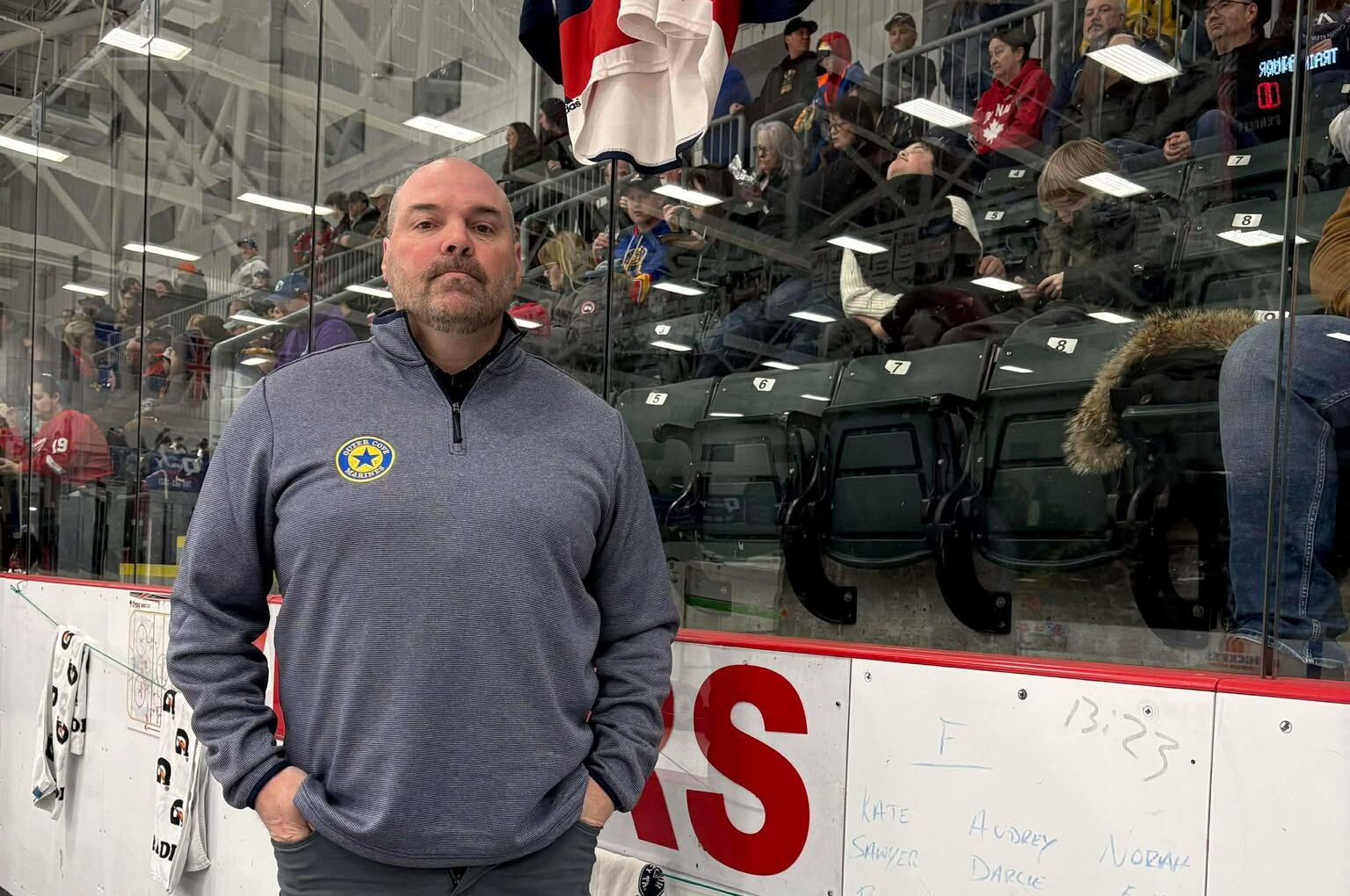
Senior hockey in Newfoundland is not something you can explain properly with just a record. You have to understand the community behind it. The volunteers. The sponsors. The players who show up after work. The families in the stands. The people who care even when the results are not perfect.
And the Outer Cove Marines story is exactly that. A story worth reading.
When I asked Tommy Beckett about bringing back a senior hockey franchise and why the risk was worth it, his answer started with context. He reminded me that senior hockey in the northeast has not been gone forever, but it has been a long time since Outer Cove had its team back where it belongs.
“So it actually hasn’t been that long since there was a senior team in the northeast. There was the North East Sr. Eagles. It’s been a little bit longer since there was the Outer Cove Marines of course.”
The push to bring the Marines back did not begin in a boardroom. It began with a community and a family name that means something in this province. Four years ago, James and Dan Cadigan stepped forward to bring back the team, and it was not only about hockey, it was about purpose and legacy.
“Four years ago, James and Dan Cadigan, decided they wanted to bring back a senior team to Outer Cove Marines. I guess first off the community wanted to see Hockey back again, as it’s always been a very Hockey base community. And secondly, it was in conjunction with the Ron Cadigan foundation, which was James and Dan’s father who had passed away and they have started a foundation, we made it a joint project with the Outer Cove Marines.”
That right there tells you why this project was not just a gamble. It was filling a void.
“In some ways, it was a risk and in some ways they felt it wasn’t obviously, knowing what the community was missing.”
They did what community hockey always does when it is serious. They opened the door and asked for help. They put out the message, and they brought people in.
“They actually put out a notification that they were going to be bringing the team back, and reached out to people and the public to see if anybody wanted to come discuss, and possibly help out. We had a meeting at the community centre in Outer Cove.”
Tommy told me he did not even know James and Dan that well at the time. But he knew the name. He knew the legend. And he knew what it meant to wear that jersey.
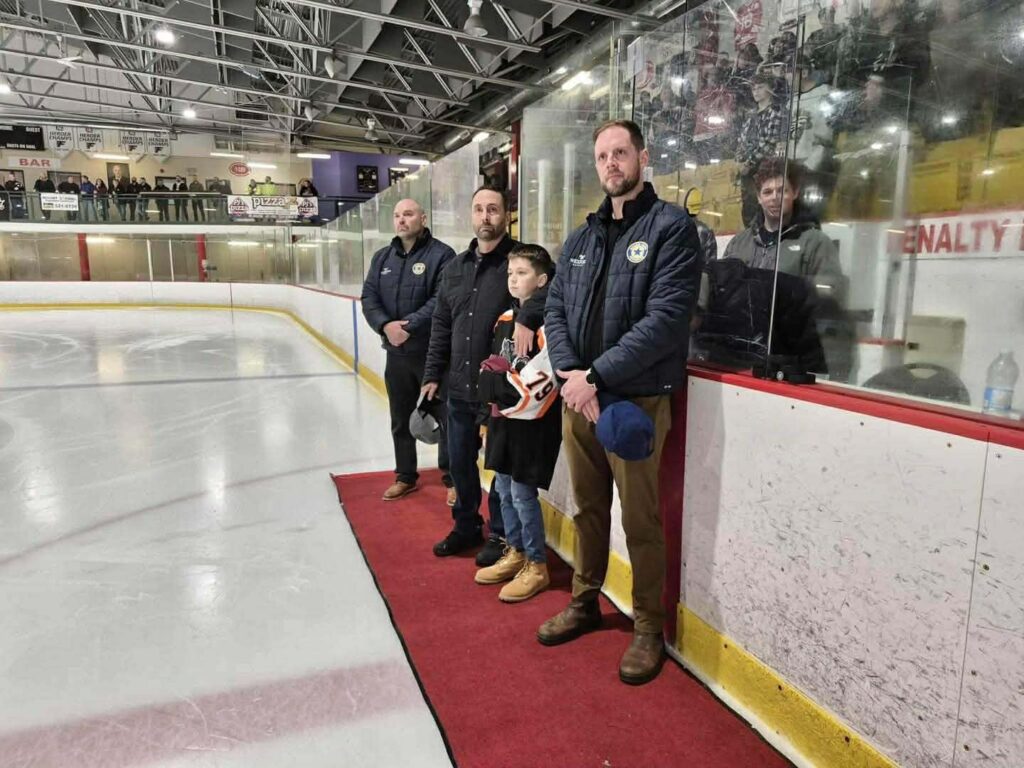
“At that point in time, I really did not know James or Dan very well… Of course I’ve heard of them, and of course, I knew their father as I was also an Outer Cove Marine myself, just shortly after their dad had stop playing, but his legendary status was always well known.”
That is the part that makes his involvement feel personal. It was not just supporting an idea. It was supporting something he already belonged to.
“I think that was pretty much why I wanted to get involved and to help out, is the fact that I was an Outer Cove Marine. I have a very special love for the game of Hockey, I watch it, I study it… So I decided to go to the meeting and talk with James and Dan over where I could help out and where I could fit in.”
Coaching was considered. But as he said, coaching demands time, and senior hockey is a large commitment.
“At that time coaching was not something I really had time for, as it is a large commitment. I did end up doing some coaching in the beginning, but we discussed it and the position of GM or general manager seemed to be a good fit. I guess the rest is history.”
Rebuilding a team means rebuilding everything
When I asked about his biggest challenge as GM, Tommy did not give me one simple answer. He gave me the reality. The pressure was not one thing, it was the entire rebuild, because the Marines were building from scratch while playing in a league that already had established contenders.
“I guess to begin the biggest pressure I felt, or we felt as a team was rebuilding. We had to essentially start from scratch, we did have a core of players, but we had to reach out bring players back who had gone to other teams through trades, etc.”
Every rebuild has a key moment, and for the Marines one of the first priorities was leadership. You cannot build a team without the right captain, and he said bringing Dan Cadigan back was a major task.
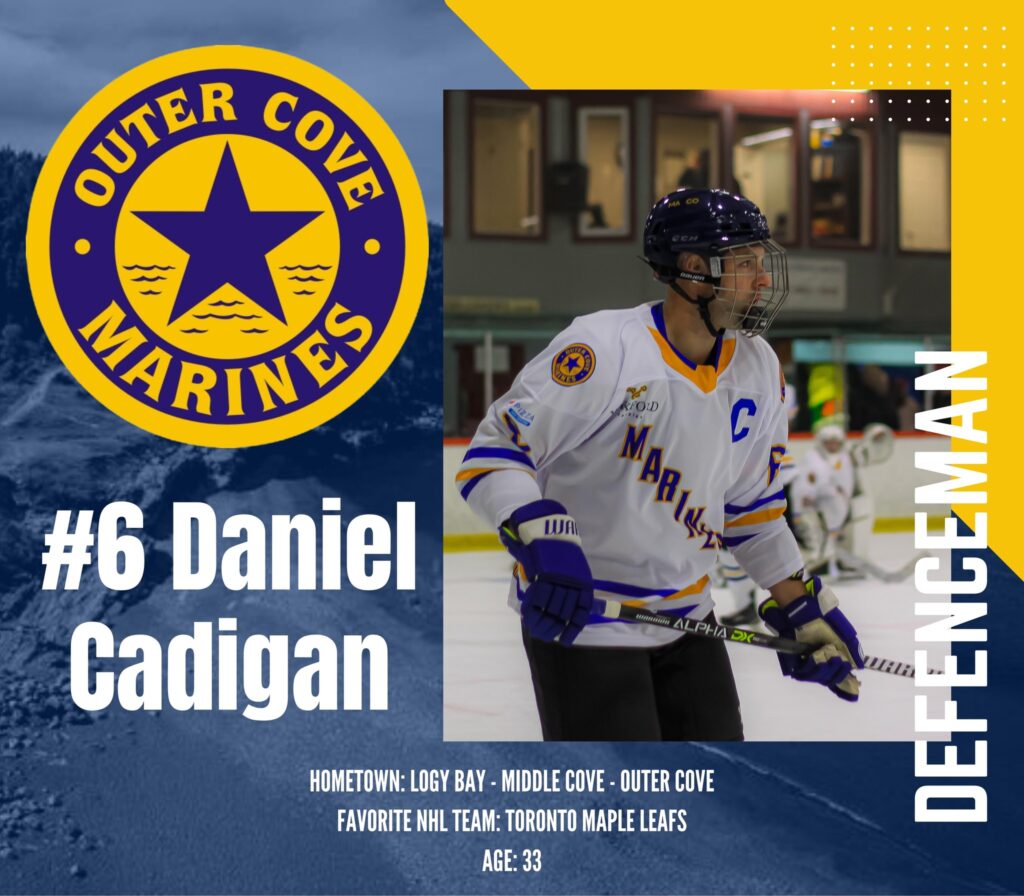
“One of the largest things we had to take care of and our first priority was getting our captain Dan Cadigan back, was not easy, but we were successful in doing so.”
From there came the draft picks and the struggle of building chemistry in real time.
“We then had to look to draft picks, etc., in our first year, and indeed it was a struggle.”
And senior hockey is different. It is not minor hockey. It is not a system where everyone is available all the time. Life comes first, and the GM has to work around that reality.
“When you’re running a senior hockey team, you also have to understand that life comes into play, these aren’t minor hockey players, they have families, jobs other obligations, so it’s often difficult to ice the best team all the time.”
Tommy also made it clear that the GM role in senior hockey touches everything. Not just roster, not just trades, not just game decisions. It is on ice and off ice. It is planning and fixing and adapting.
“As a general manager, you are involved in pretty much all aspects of the hockey team on and off the ice.”
Then comes the part most fans never see, the finances. People think senior hockey runs itself, but Tommy laid out the real numbers and the real pressure.
“We were very fortunate since day one to have a fantastic main sponsor, and numerous other sponsors who have jumped in, in different ways to help on the financial side. Don’t get me wrong. It’s a continuous struggle as the cost of running a senior hockey team is probably a lot higher than what most people think., you’re potentially looking at a budget of anywhere from $25-$33,000 a year.”
And because ticket sales matter, community engagement becomes more than a social thing. It becomes a survival thing.
“This of course, leads a little bit more into community engagement, a lot of that financial responsibility does come from ticket sales. I believe we were very fortunate the first year that community was behind us and we did have a great set of fans.”
But he also admitted something that is true in every community league. When results struggle, attendance can struggle. That is why keeping people engaged is a job on its own.
“Sometimes in situations where the team may be struggling on ice, you start to struggle off ice, but these are hills that we’ve had to climb from day 1, and you constantly strive for a different ways to keep community involved.”
Long term thinking in a league that wants quick results
When I asked whether the team was expected to win sooner, Tommy explained the difference between what fans want and what a rebuild actually requires. Fans want immediate results. But when you build from the ground up, you plan for the long term.
“Fans for the most part obviously want to see immediate results. Realistically when you are building a team primarily from the ground up, it is indeed long-term results that we as a hockey club are hoping for.”
He was honest. A Herder in year one or two was never a realistic expectation, even if every team dreams of it.
“Did we expect to win a Herder, or a league championship in our first year, or our second year… No, it would’ve been great Ha ha … but it wasn’t in our expectations.”
What he did say is that the direction has changed in the right way, especially this year. A younger core is developing, veterans are guiding, and draft picks are starting to become real contributors.
“I think this year we have certainly moved in the right direction towards our rebuild even though it was our fourth year in the league. We have moved more towards a younger core, combined with the veterans that we need to help guide as well. Our draft picks, especially from this year and a couple of other acquisitions are really starting to come into their own now.”
He also pointed to a late season improvement that gives them momentum.
“Even in the last quarter of the season, we improved immensely, which is a great sign for next year and years to come.”
And he shared something that Coach Hutchens said that sums up why the team believes the story is not finished yet.
“At the end of the season, coach Hutch said “ if we had another 10 games in the schedule I think we would’ve really turned a few heads.””
A GM who is hands on because he has lived it
When I asked him about leadership style, Tommy explained that being a former player gives him perspective. He knows the feeling of winning and losing and he tries to carry that into how he manages.
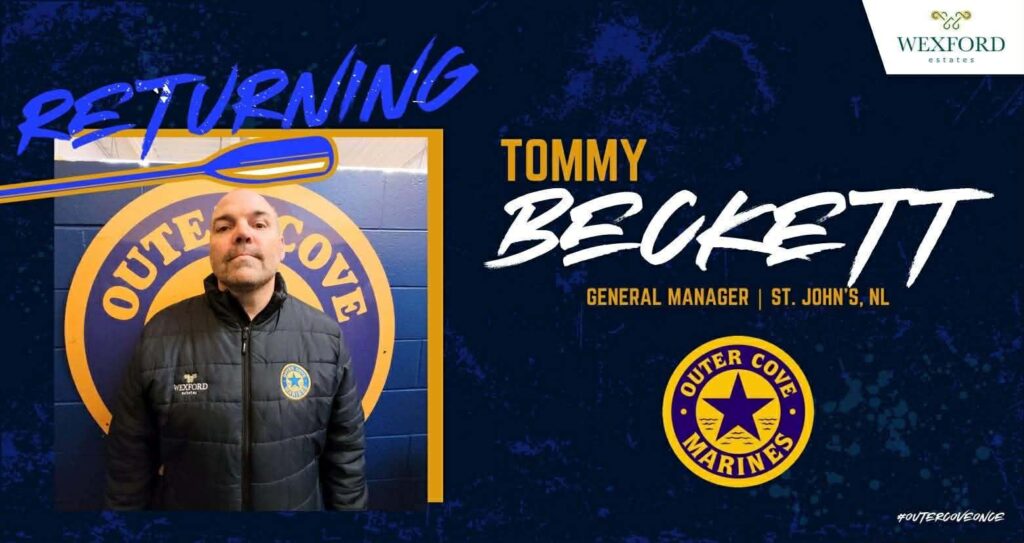
“I believe one of the great positives I have as a general manager, is that I was a hockey player as well, and obviously being a former Marine only enhances that. I’ve been in the trenches. I know what it’s like to win, and I know what it’s like to lose. When I played, I was always a player that led by example… And I sort of try and incorporate that into the task of being the general manager.”
And this is where senior hockey becomes very real. The GM is not just sitting behind a phone. He is washing jerseys. Picking up supplies. Organizing fundraisers. Being part of game day. Doing the tasks that keep things moving.
“I love being hands-on in every way, be it picking up supplies, bringing the jerseys home and washing them, to helping to organize fundraisers, game day activities and most importantly player personnel and acquisition.”
But he repeated what matters most. Nobody does this alone. Senior hockey is volunteers, time, sacrifice, and a group of people doing work they do not get paid for.
“I would like to state and make it very clear that I have an excellent team around me, of which, without them none of this could be accomplished. If people only knew what happens behind the scenes with a senior hockey team., for a bunch of people who do not get paid for it, there is a lot of time put into it.”
He even gave a line that every hockey person will understand. When you are building something, your teammates and staff become your daily life.
“The president of our club James Cadigan and I probably during the hockey season talk to each other more than we do our wives.”
He described the coaches group as constant conversation, constant evaluation, constant work.
“We have a coaches group that’s a daily conversation of what’s happening for practice, what’s happening for games, discussion about how the games went, discussion about how the practises went.”
And then he said it plainly.
“I thoroughly like to be involved in all of it, but as the expression goes, “it takes a village”, that is our hockey club for sure. I could not be more blessed or thankful for the help that I receive from top to bottom.”
The coaching group and the identity of the team
When I asked about the coaching staff and what made them the right fit for the Marines identity, Tommy appreciated the question and explained that commitment is everything. If you are doing this properly, every role has to be filled by someone who is there for a reason.
“I’ll start off by saying that that’s a great question. When you’re putting full-time and effort into it, you have to make sure that everybody involved is there for a reason.”
He said Coach Hutchens is the most dedicated coach he has seen, and highlighted organization, high performance experience, systems, and development of younger players.
“Coach Hutch is probably the most dedicated hockey coach I’ve ever seen. He’s organized, has run teams before at different levels, high-performance teams., has a great knowledge of the game, does a great job of incorporating systems into practice, etc., and very importantly has a great knowledge of the younger players and has been the driving force in the young rebuild that we are currently in.”
Coach Powell, he said, is community rooted and a former Marine himself, with strong relationships and support.
“Coach Powell is another former Outer Cove Marines player himself, he lives in the community, and without a doubt, has been one of the team’s biggest supporters. He has a great knowledge of the game., excellent relationship with the players on every level. He’s been a great supporter of the team and how it’s grown in the community.”
Coach Barrington, he said, brings defensive knowledge and communication that fits the players.
“Coach Barrington was a great defenceman himself, and has stepped in as our defensive coach. He again also has great relationships with the players and knows how to speak to them at the right level. Has a great knowledge of the game in the back end where for the most part it’s needed most.”
He spoke about Coach Cadigan and his role evolving from player to assistant coach to president, and what he has done for the club.
“Coach Cadigan , as I spoke of before was a driving force for this entire thing to get off the ground. He spent a couple of years as a player, then moved into assistant coach, but now primarily would take the role as president of the team. What he’s done for this hockey club you cannot even put into words.”
Then he mentioned Coach Marky Dwyer, the eye in the sky, the one watching from above and reporting back.
“We also have Coach Marky Dwyer. Coach Dwyer is what we referred to as the eye in the sky, he sits with me in a lot of games and we just watch from up top and then report back to the other coaches. Coach Dwyer has been around since day one, a pillar in the community, he has been involved with Sports for a very long time, and as a local news reporter in the sports market as well , a great addition for us to have around!”
He finished it with what sounded like pride, not just in results, but in effort.
“The level of commitment is unmeasurable. I could not be happier!”
Legacy and the name on the jersey
When I asked about honoring legacy while building a modern organization, he started where it starts, with the name.
“Well I guess it all starts with the direction of the actual name. Coming back to the league changing from Northeast Sr. Eagles to the Outer Cove Marines, was a very big step in itself.”
He described it like the original six NHL teams, modern teams that still honor traditions. That is what they are trying to do.
“I guess you see similar activities with say the original six hockey clubs of the NHL. They are building a new modern hockey team, but in doing so they take time to honor, long-standing traditions, recognizing different players and different members of the community, which we have tried to do .”
Then he spoke about Ron Cadigan, and there was no hesitation in his opinion of who Ron was.
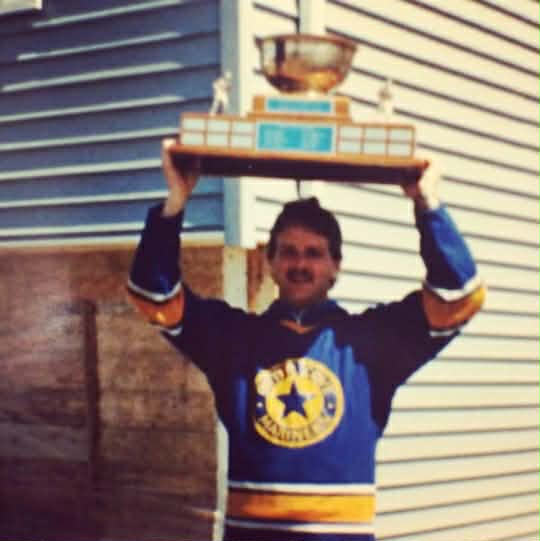
“Ron Cadigan, in my opinion is probably the most recognizable, and probably the best player whoever ever put on the uniform.”
The foundation matters. The sons matter. The fact that the team is connected to that legacy is personal to him.
“Having our club be associated with his foundation and continuing on using his name, and watching his son’s, both ignite, run and captain this hockey club is something very special to me, and the whole team.”
And then he added something that fans will recognize immediately.
“Also I would add that Barbara, Ron‘s wife… James and Dan’s mother, is a staple at every game and is always helpful with everything we need with the team and/or community functions. Our #1 one fan.”
The players who keep the morale and the future core
When I asked which players deserve recognition, he did not start with stats. He started with respect. He gave credit to anyone who wore the jersey and fought.
“Even though we have been improving, we haven’t had the most successful years to date, and it’s a credit to every single player who’s put the jersey on and gone out there every night and fought the battles.”
Then he highlighted the leader.
“I guess one of the biggest standouts would be our captain Dan Cadigan. Dan has been captain since day one, he puts his heart and soul into this team and hes a fantastic leader both on and off the ice.”
He then mentioned the veteran group that kept the room steady, especially in the tough stretches, and he made sure they were named.
“Some senior players such as Tyler Bennett, Kory Waterman, Klay Kauchur , Robbie Perks, Chris Blackwood and Matty Walsh… have been there since the beginning of my time and a great dressing room guys to keep them morale up at all times.”
Then he spoke about the younger names that represent where this rebuild is heading.
“There are some new younger guys to watch in Nathan Flynn, Travis Badcock, local talent Trevor Bridger are all rising stars with huge potential in this league.”
And he gave credit to his goaltenders too, the kind of players who can be overlooked unless you call their names out.
“Our goaltenders have been there since day one in Josh Langmead and Brandon Summers , plus this year we picked up a third great goaltender in Mitchell Dinn.”
Then he summed up the kind of roster it is, a group of players playing roles.
“We also place a lot of emphasis on chemistry, you want to make sure the guys you are bringing into your club are the right fit, and that sometimes can be even more important than the level of talent. We are again very excited to get started next year and just see what we have to work with.”
The Herder is not a dream, it is the goal
When I asked if the Herder Memorial Trophy is part of the long term vision, Tommy did not give a safe answer. He gave a confident one.
“Yes, 110% competing for the Herder is a long-term goal for us. Winning the Herder is actually the long-term goal for us.”
He explained the mindset of improving season to season and focusing on what needs fixing.
“We strive to just get better and better every single season, in some ways we do in other ways we don’t. So we try and focus on the don’ts and make those even better for next year which at this point, we seem to be doing a pretty good job.”
He said winning would mean everything to the team because of where they started.
“Basically, we had to start from scratch and thus getting to winning a league championship and even competing and winning a Herder championship is something that we set out to do from day one.”
And he pictured what it would mean for the community.
“as the community, I can just imagine how excited they would be. They’ve been behind us since day one and of course it would be a great accomplishment and honour to see us hoist that trophy in a parade through the town!!”
How he wants to be remembered and what he asks from the fans
When I asked about his defining contribution, he admitted the obvious answer is championships, but he went deeper. He wants to be remembered as someone who put the team first.
“I think I would like the players who have played for me, the staff that I have worked with, and people in the community to easily be able to say that he always put the team first.”
He spoke about his father, who passed away before he became involved, and the love for hockey that was installed in him, something he carries daily into the job.
“My father who passed away just before I became involved with the team, instilled a love and passion for this game in me that I’ll never ever forget, and I apply that essentially every day that we work towards our goal goals with this club.”
His vision is simple and it is the kind of vision that fits a place like Outer Cove.
“We want to build a good community based winning hockey club, and I pretty much think that that’s the bottom line.”
Finally, I asked what he would say to fans watching this rebuild and wondering what is next. He referred back to the late season improvement and what could have happened with more games.
“That’s a very interesting question. I spoke a little bit about it before to the fact that if we had another 10 games in this current season, I think we would’ve made a little bit of a splash.”
He said the younger core matters. He said fans should keep an eye on them. And then he used one word that says everything about a rebuild.
“One of the words I’ll use is patience.”
He believes the team is on the right path. And ended the great hockey conversation with,
“Outer Cove Once…Outer Cove Twice…”
(All images courtesy of G.M Tommy Beckett and Outer Cove Marines Facebook Page)